"A person becomes great in the degree to which they work for the welfare of others. The best way to find yourself is to lose yourself in the service of others." - Adapted from Mahatma Gandhi, Young India, 5 March 1925When I travelled to Tashkent, Uzbekistan for the ACWAY Global Youth Forum 2026, I expected …

“A person becomes great in the degree to which they work for the welfare of others. The best way to find yourself is to lose yourself in the service of others.” – Adapted from Mahatma Gandhi, Young India, 5 March 1925
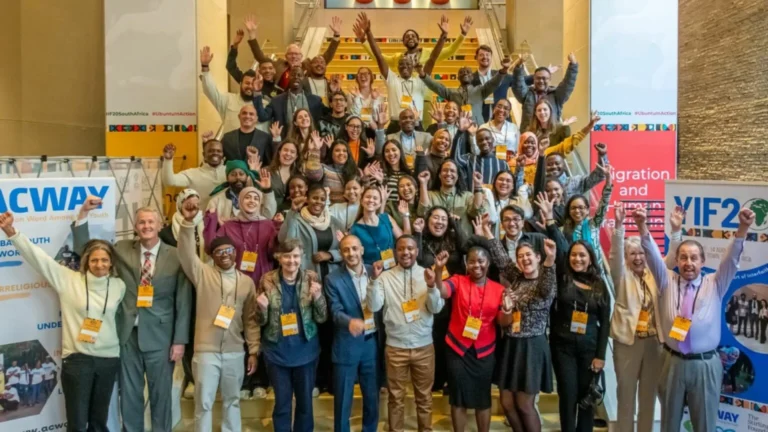
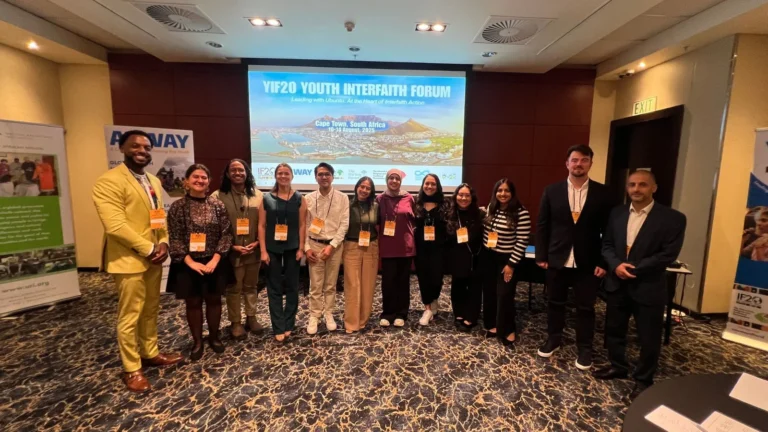
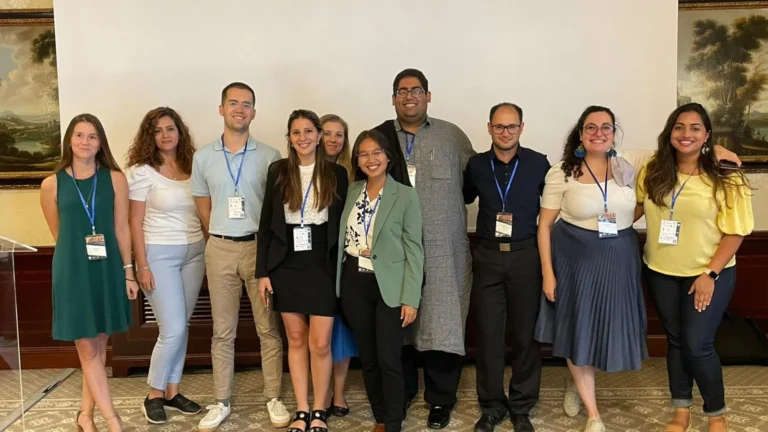
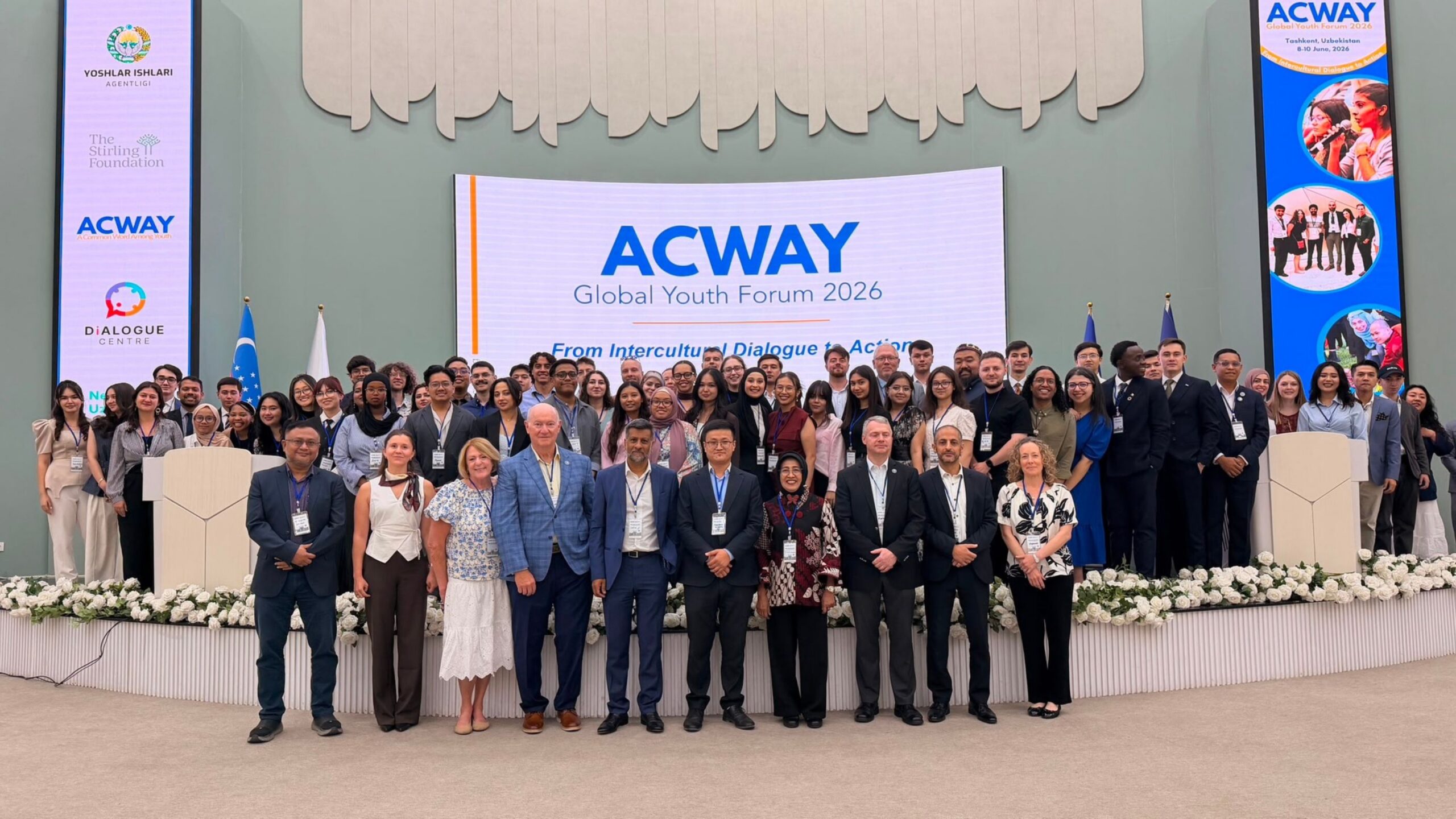
When I travelled to Tashkent, Uzbekistan for the ACWAY Global Youth Forum 2026, I expected to leave with a stronger network of young faith leaders from around the world. I expected conversations, collaborations, and perhaps the beginning of a few future partnerships. The Forum, organised by A Common Word Among Youth (ACWAY), brought together more than sixty young leaders from nineteen countries and eight faith and non-faith traditions around a simple yet ambitious premise of ‘moving from intercultural dialogue to action’.
I left with something much more valuable. In fact, the most significant lesson I took back home emerged from conversations with other Fellows. At the Forum in Tashkent, we spoke about our communities, our different realities, and the challenges we each faced in building peace. Although we came from different cultures, faith traditions, and political contexts, I was struck by how familiar our aspirations were. We were all trying to answer similar questions: How do we rebuild trust? How do we engage young people who increasingly feel disconnected from institutions? How do we respond to polarisation without becoming polarised ourselves?
In an increasingly polarised world, young people do not simply inherit divisions; we also inherit the capacity to transform these divisions into meaningful dialogues and find avenues of mutual understanding and respect owing to our shared identity and lived experiences.
International discussions on peace and social cohesion often begin with institutions and frameworks. Young people, however, often situate these discussions somewhere else altogether. We begin with our communities, with people whose names we know, neighbourhoods we recognise, and problems we experience first-hand. This is precisely why youth voices matter in interfaith and intercultural dialogue.
In an increasingly polarised world, young people do not simply inherit divisions; we also inherit the capacity to transform these divisions into meaningful dialogues and find avenues of mutual understanding and respect owing to our shared identity and lived experiences. This is particularly important in interfaith spaces. Religion continues to shape identities, values and public life across much of the world. Yet conversations about faith are frequently dominated by established religious leaders, policymakers and academics. Their contributions are indispensable, but they are incomplete without youth voices, some of whom I had the opportunity to meet with at the Forum.
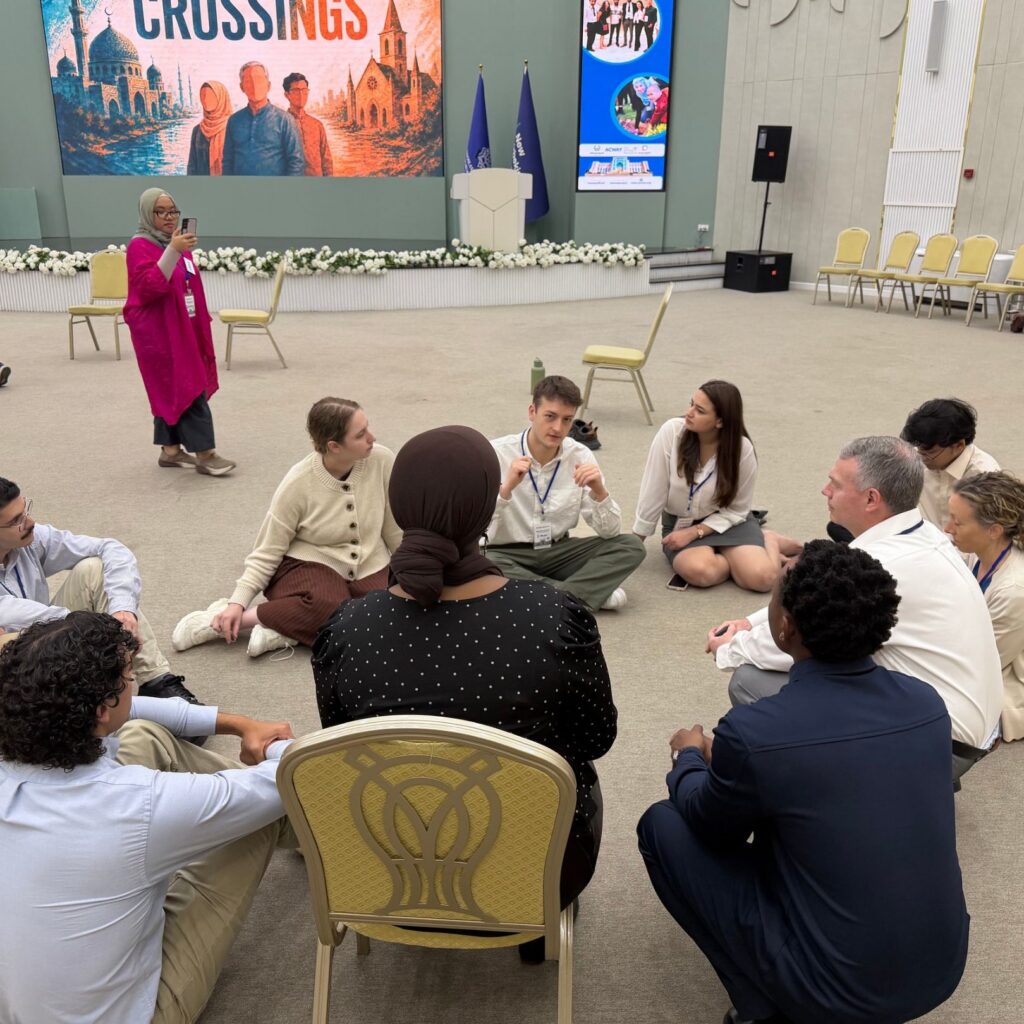
Young people experience faith differently. Many of us navigate multiple identities simultaneously. Our identities are often shaped by religion, but also by technology, climate anxiety, economic uncertainty, polarisation and rapidly changing societies. We move between communities more fluidly, creating opportunities for dialogue that transcend traditional boundaries. Our lived experiences therefore offer perspectives that cannot be replicated through policy papers or institutional statements alone.
What impressed me most about ACWAY was its understanding that dialogue is not an end in itself. The Forum was intentionally designed around advocacy, dialogue and action, encouraging participants not merely to exchange ideas but to develop practical initiatives that they could take back to their communities. ACWAY’s commitment to translating conversations into lasting local impact was the Forum’s most impressive and remarkable attempt in ensuring that the conversations we had over the three days in Tashkent go beyond the room and translate into meaningful youth-led action.
...spaces like ACWAY matter not because they bring young people together for a few days. They matter because they demonstrate what becomes possible when young people from different faiths, cultures and countries are trusted not simply to imagine a more peaceful future, but to begin building it together.
In doing so, the Forum also reinforced that when working with young people, local experiences matter. Whether discussing interfaith relations in Central Asia, community resilience in Africa, youth participation in South Asia or social cohesion in Europe, participants at the forum consistently shared their lived experiences informed by local realities. The moment was a reminder of how young people are uniquely positioned to act as translators between local realities and international conversations. We understand the language of our communities, while increasingly participating in global policy discussions. We are able to explain why an international recommendation may or may not work in practice, and equally why a successful local initiative deserves global attention.
The ACWAY Global Youth Forum reminded me that the future of interfaith dialogue does not lie solely in promoting tolerance. It lies in building relationships capable of collective action. Dialogue creates understanding, but action creates trust. Trust, in turn, becomes the foundation upon which peaceful and resilient societies are built.
Perhaps this is what Gandhi’s words ultimately remind us of. We do not discover ourselves in isolation. We discover ourselves through service, through encounter, and through the quiet recognition that our own communities become stronger when we choose to listen to others with humility.
In an increasingly fragmented world, spaces like ACWAY matter not because they bring young people together for a few days. They matter because they demonstrate what becomes possible when young people from different faiths, cultures and countries are trusted not simply to imagine a more peaceful future, but to begin building it together.
By Prathit Singh
Uzbekistan 2026 Cohort, India/Switzerland
Tags:interfaithpeaceyouth