Generally, youth in Tamale are deprived of basic skills in Information and Communications Technology (ICT). They have never had the opportunity to use a computer since their financial statuses disadvantage them in acquiring a computer. The skills in ICT are best acquired when an individual frequently uses the computer and the internet. Unfortunately, the most youth in Tamale and in other similar areas have no access to computers since they do not own them.
Fortunately, in Tamale there are a few internet cafes where one could go and have access to a computer, but most people in Tamale do not have the prerequisite knowledge in using a computer to their advantage, so patronage of these few internet cafes is relatively low; at least they would have to know how to create and use an email address and generally browse the internet. If basic knowledge in ICT is acquired by these youth, they can adequately patronize the internet cafes to help hone their educational skills and opportunities.
We hope our volunteer work at the basic schools will provide students with basic skills in ICT to improve learning. It will be a pathway that will open these minds to new ways of thinking and prepare for any future studies.
main aims
To train basic school students within Tamale in basic Information Communications Technology skills
Project summary
The ACWAY Computer Literacy Project is aimed at training students who are deprived of basic Information Communications Technology (ICT) skills in Tamale, northern Ghana.
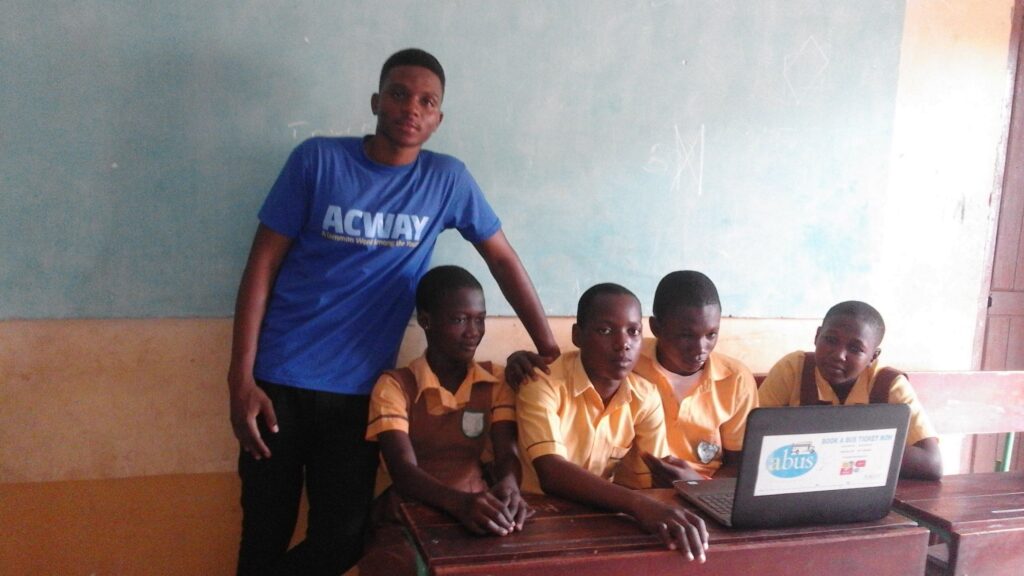
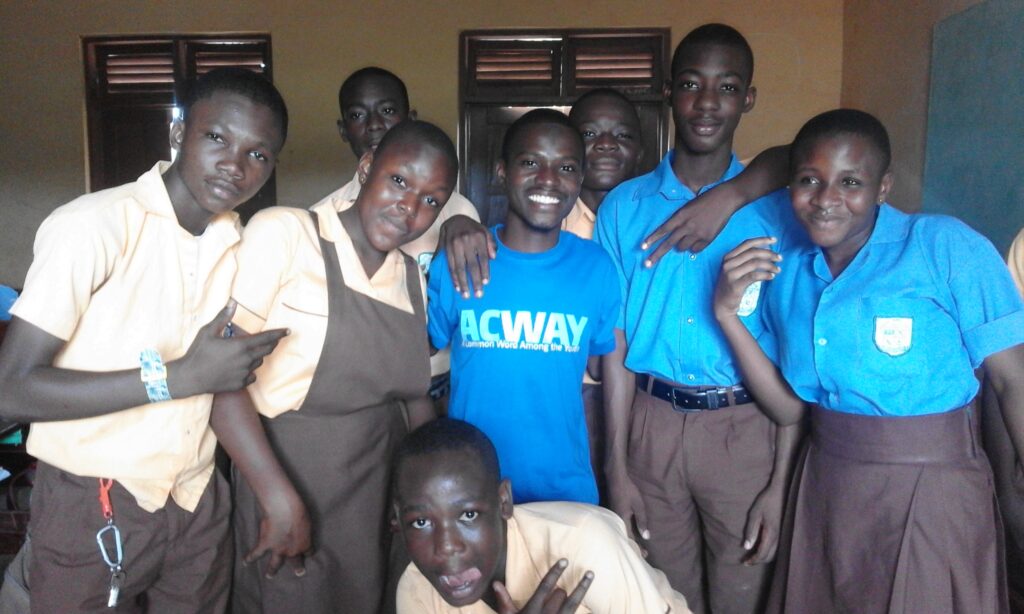
The first phase of this project was completed at Dahin-Sheli Junior High School. We had a week (5th -9th June, 2017) engagement with 106 students. Our engagement was to assist the teacher in charge of ICT at the school. Five (5) ACWAY-Ghana team members were available to execute this phase of the Computer Literacy Project. The ACWAY-Ghana team is made up of youth belonging to different religious faiths; mainly Islam & Christianity.
project evaluation
The impact of the project was measured in very simple and concrete ways; we gave short assignments to all participants, which were to be done before the end of each session. In the whole week, we had 7 sessions with them. We monitored students’ progress in applying the skills they learned, and they did very well. Equally, the participants attested to us how much they have learnt and hope to make use of the skills learnt to access opportunities to enhance their lives.