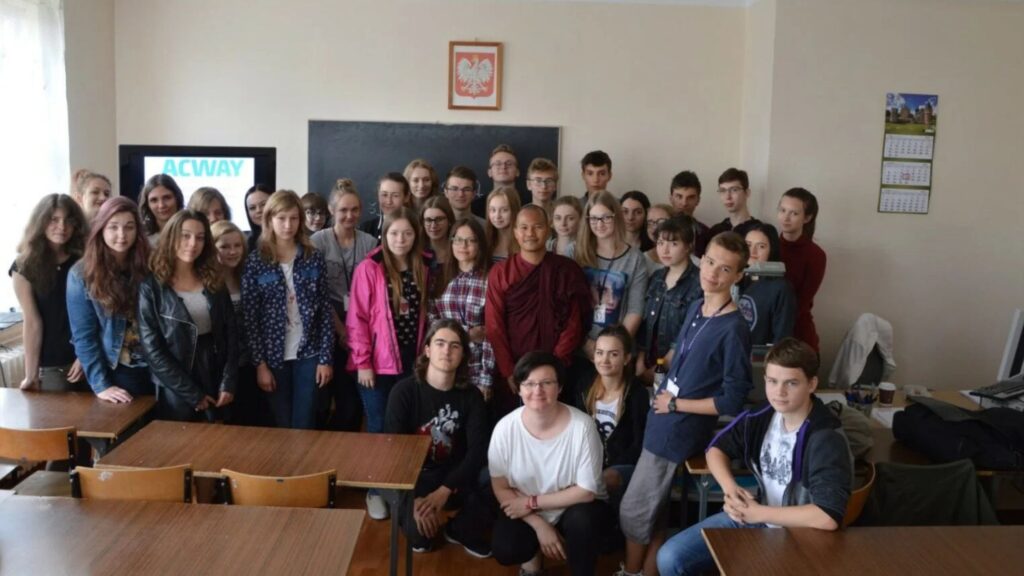
The project featured two educational workshops led by Ven. Mandalar Lankara, engaging both 30 high school students and over 65 members of the local community from diverse religious backgrounds. The initiative aimed to promote intercultural understanding by creating opportunities for participants to explore cultural diversity through dialogue, reflection, and shared learning.
The sessions provided a neutral and inclusive space to discuss the challenges of mutual understanding and to strengthen capacities for fostering harmony among youth and community members. Presentations introduced elements of Burmese (Myanmar) and Polish cultures, enabling participants to compare traditions and reflect on similarities and differences between Buddhist and Christian practices, as well as broader Eastern and Western value systems.
Through interactive discussions and a concluding Q&A session, participants developed a deeper awareness of how culture shapes perceptions and contributes to both understanding and misunderstanding. The workshops reinforced the role of education and knowledge-sharing as transformative tools for peacebuilding, while promoting values of coexistence, respect, and tolerance.
Main Aims
- To introduce high school students and local community members to Burmese Buddhist culture and related cultural traditions.
- To promote intercultural awareness and deepen understanding of cultural diversity within and across communities.
- To strengthen participants’ understanding of identity and culture and how these shape beliefs, behaviours, and attitudes.
- To foster empathy, openness, and positive attitudes toward peaceful coexistence and mutual respect.
- To encourage critical thinking, social responsibility, and constructive engagement in diverse cultural settings.
- To build skills that support problem-solving, dialogue, and the development of stronger community networks for peacebuilding.
Target audience
High school students and local people