
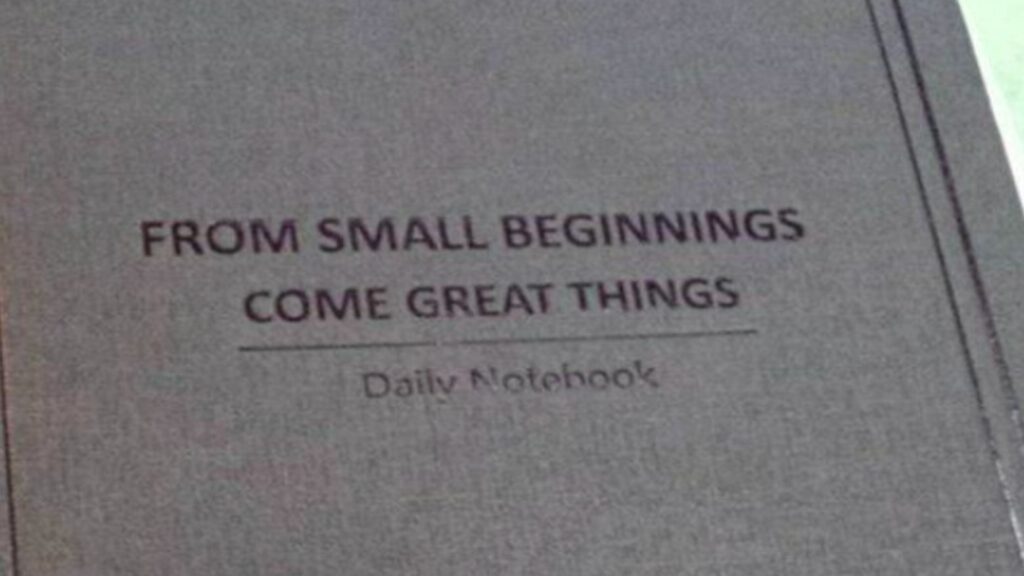
The project was designed to create a physical space for individuals to share their thoughts and perspectives on religion and religious harmony through a journal titled “The Peace Journal.” While travelling across Southeast Asia, participants were invited to respond to three questions related to religious harmony, allowing for meaningful, on-the-go engagement. The initiative gathered 30 entries from people of diverse backgrounds and faiths, with contributors encouraged to write in any language they felt comfortable using. Most participants were fellow travellers encountered along the journey, and selected excerpts from their reflections are included in the report.
The three Questions
- Who are you?
- What is your relationship with religion?
- What is your view on co-existence?
The three questions asked led to interesting responses, some of which are outlined below.
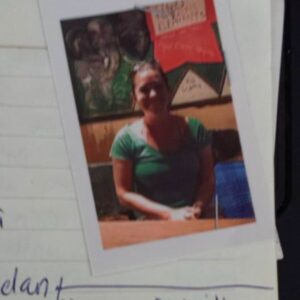
“At 5 my family moved to Estonia for 3 years and then on to Saudi Arabia for the following 2 years. I participated in Ramadan solely to support and learn. My friends took me into their homes, taught me their prayers, and submerged myself in their culture. I created lifelong friendships and memories. Upon returning to the states, I realized that foreign countries and people felt more like home than my actual “home country.” Less than 3 months later, 9/11 happened. I was 10 years old. My teachers, parents, friends, adults, all said the same thing. “ALL MUSLIMS ARE TERRORISTS.
I was heartbroken. I was devastated. And confused. These are adults, “older and smarter,” were saying these incredibly ignorant things. I felt offended and so sad about what I was hearing about my best friend. I am now 25, and I will never forget the impact or be capable of developing a full level of patriotism for my country. I take my story as an opportunity to teach people to learn, not judge. So my relationship with religion? Have an open mind, I believe that everything happens for a reason. Can we co-exist? Absolutely. If and when we as humans can let go of judgement and hate and decide to learn and love. This world would have a chance to become a truly beautiful place.”
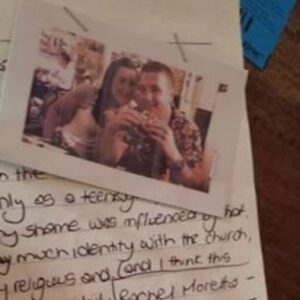
“Until my 20s I always had religious beliefs, I always believed there was a god and this, in some way, filled me with hope. I joined at 18 and served in the British Army for 6 years. My experiences abroad took me further and further away from religion.
I returned from an operational tour in Iraq at the age of 22. I had come to the conclusion that there was no god. I could not see how a higher being would allow humanity to destroy itself on a daily basis. I had lost all my faith and became very angry. Recently, I have tried to look at religion differently. I can see the importance of faith and the positivity it can create in people’s lives. I intend to continue exploring this and hope that my travelling experience can help me with this.”
impact
The Peace Journal sparked strong interest and engagement throughout the journey, with individuals frequently inquiring about the project and its purpose. Introducing the journal often led to organic and meaningful conversations around religious harmony, creating spaces for dialogue among diverse groups. In several instances, these interactions evolved into deeper group discussions, demonstrating the project’s ability to connect individuals across backgrounds. Notably, in Thailand, participants independently engaged with the journal by reading and discussing previous entries, highlighting a sense of shared ownership and curiosity. Additionally, the project’s reach extended beyond in-person interactions, as participants shared their experiences with the journal on social media, further amplifying its impact.